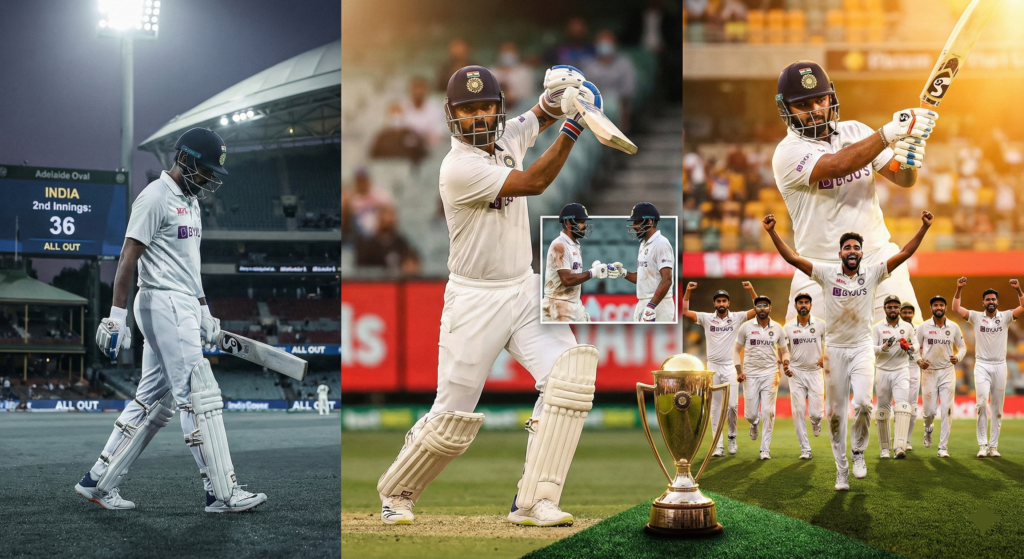

It’s said with confidence, sometimes even with relief. As if the longest format has finally run out of breath in a world addicted to instant highlights and six-hitting sprees. And on the surface, the argument sounds convincing.
Empty stands on weekday mornings. Matches ending inside three days. Young fans who’d rather watch a 40-over game than commit five days of their life. Add the explosion of T20 leagues, and suddenly Test cricket looks like an old warrior struggling to keep up with a faster, louder battlefield.
So yes, people think Test cricket is dying. And they have their reasons.
Time is the first enemy. Five days feels like a luxury now. Careers are busier, attention spans shorter. Not everyone can sit through sessions, let alone appreciate the slow burn of a contest that takes two days just to reveal its true story.
Money is the second. Broadcasters chase ratings, boards chase revenue, and T20 brings both in truckloads. When a three-hour match can earn more than a five-day epic, the business side of cricket naturally leans toward the shorter formats. For smaller nations especially, Test cricket becomes an expensive passion project.
Then there’s the imbalance. A handful of countries dominate the format, while others struggle to stay competitive. One-sided series don’t help the narrative. Fans tune out, critics sharpen their knives, and once again, Test cricket is declared terminally ill.
And yet. Every time the obituary is written, Test cricket tears it up.
It fights back not with noise, but with moments.
A spell of fast bowling under grey skies where the ball talks more than the crowd. A session where survival becomes an act of courage. A batter on 30, fighting cramps, swing, and self-doubt, knowing his team needs time more th
t’s said with confidence, sometimes even with relief. As if the longest format has finally run out of breath in a world addicted to instant highlights and six-hitting sprees. And on the surface, the argument sounds convincing.
Empty stands on weekday mornings. Matches ending inside three days. Young fans who’d rather watch a 40-over game than commit five days of their life. Add the explosion of T20 leagues, and suddenly Test cricket looks like an old warrior struggling to keep up with a faster, louder battlefield.
So yes, people think Test cricket is dying. And they have their reasons.
Time is the first enemy. Five days feels like a luxury now. Careers are busier, attention spans shorter. Not everyone can sit through sessions, let alone appreciate the slow burn of a contest that takes two days just to reveal its true story.
Money is the second. Broadcasters chase ratings, boards chase revenue, and T20 brings both in truckloads. When a three-hour match can earn more than a five-day epic, the business side of cricket naturally leans toward the shorter formats. For smaller nations especially, Test cricket becomes an expensive passion project.
Then there’s the imbalance. A handful of countries dominate the format, while others struggle to stay competitive. One-sided series don’t help the narrative. Fans tune out, critics sharpen their knives, and once again, Test cricket is declared terminally ill.
And yet.
Every time the obituary is written, Test cricket tears it up.
It fights back not with noise, but with moments.
A spell of fast bowling under grey skies where the ball talks more than the crowd. A session where survival becomes an act of courage. A batter on 30, fighting cramps, swing, and self-doubt, knowing his team needs time more than runs.
You don’t get that in any other format.
When a match goes down to the final session on day five, with the fielders around the bat and the crowd holding its breath, the debate disappears. Nobody asks about relevance then. Everyone is locked in, heart rate up, watching a game that demands patience and rewards it richly.
Test cricket survives because it reveals character.
It shows who can bat when the pitch is breaking up and the body is breaking down. It shows who can bowl the same line for an hour without reward, trusting that the mistake will come. It exposes weaknesses, but it also uncovers greatness.
Great players are still made here.
Ask any legend, and they’ll tell you the same thing: if you conquer Test cricket, you conquer the game. That belief hasn’t faded. It’s why a debut cap still brings tears. Why a century at Lord’s or a five-for overseas still means more.
The format adapts too, quietly. Faster over rates, better pitches, day-night Tests, sharper scheduling. It doesn’t scream for attention. It adjusts, just enough, without losing its soul.
And perhaps that’s why Test cricket keeps surviving.
It doesn’t try to compete with T20 on entertainment. It offers something different. Something deeper. A contest where time is not the enemy, but the stage.
So is Test cricket dying?
Maybe it’s no longer the dominant force it once was. Maybe it never will be again.
But dying? No.
As long as there are players willing to fight for a draw, fans who understand the beauty of a hard-earned session, and moments that stay with us long after the last ball is bowled, Test cricket will keep doing what it has always done.
It will be written off.
And then, quietly, brilliantly, it will fight back.